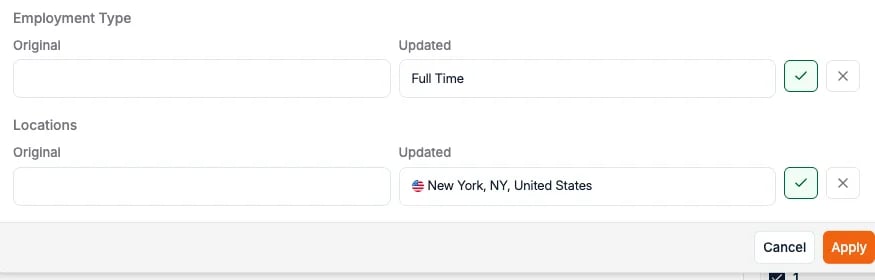
A job’s Overview tab is where the role gets defined: the client and contact data, the requirements, the fee structure, and the sourcing criteria that power AI matching and job description generation. Everything Spott’s AI does on this job runs on what you put here, so it is worth doing properly once.

Access a job’s Overview tab

The tab row on a job record
In Spott, go to Jobs.
  • Find the job you are looking for. Make sure it is under the right company or client.
  • Click on the job title. The Overview tab opens first.

Set the job up, in order

The steps below build on each other. Working through them in this order means the AI has something to work from by the time you ask it for anything. Start with the raw material you already have:
  • Attach files, for example the client’s job description document.
  • Link notes from the intake call or internal discussions. Notes are never linked to a job automatically, so tag the intake note to the job yourself. See adding notes.
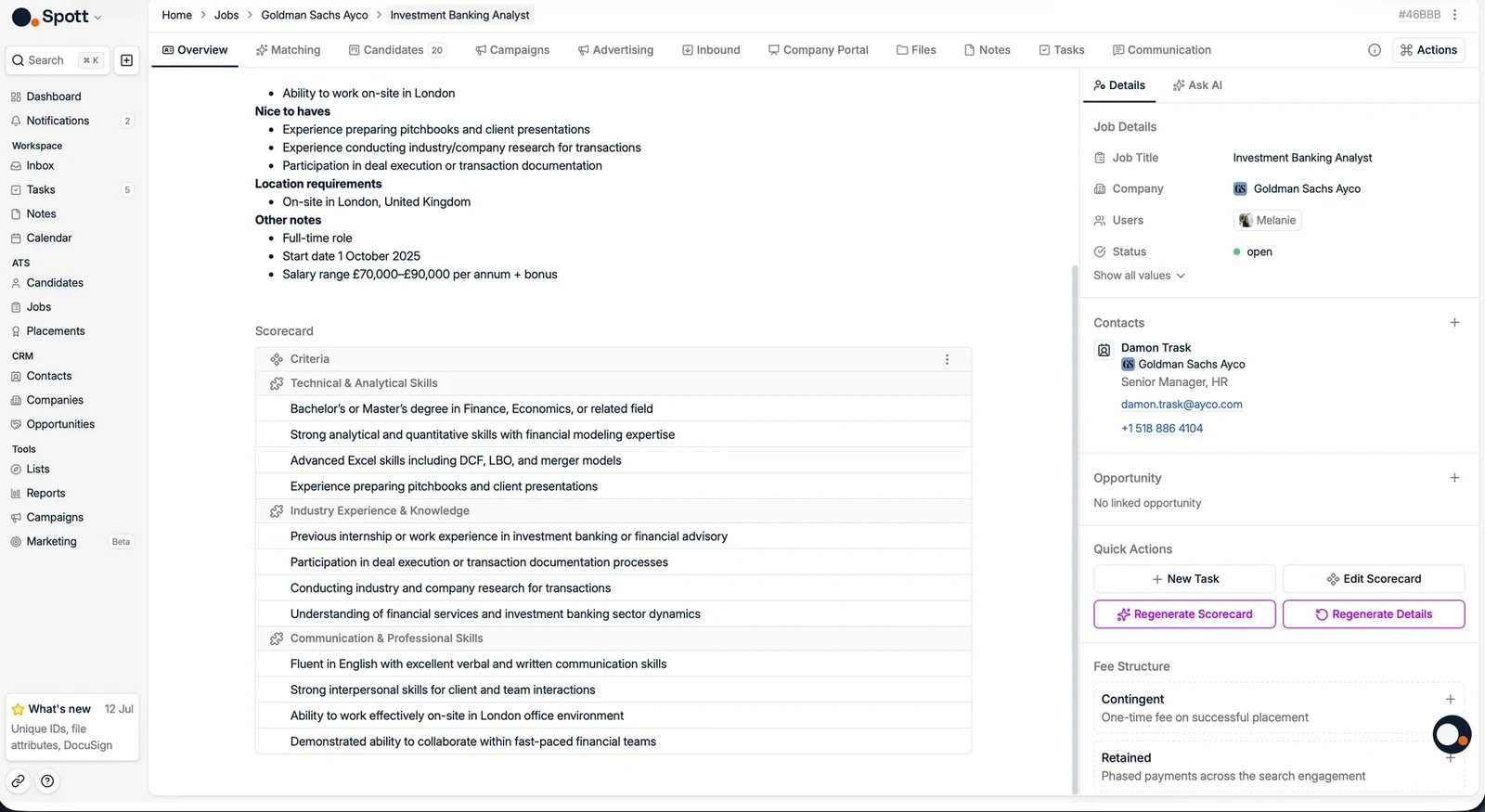
The Overview tab with sourcing criteria and attachments

2. Generate the details from that input

Click Regenerate Details and Spott reads what you attached in step 1 to fill in the job, in the language you choose. It can:
  • Summarize an existing job description into a concise format
  • Fill in missing information based on the provided content
  • Rewrite the description for clarity and better candidate engagement
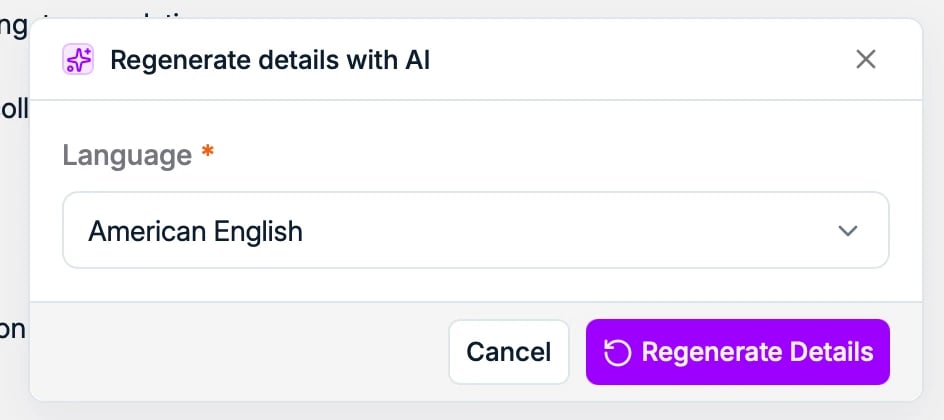
The Regenerate Details dialog with language selection
If you would rather not use AI, paste an existing job description or write the details by hand instead. The rest of the flow is the same.

3. Fill in the details and the fee structure

Complete the role’s own fields: requirements, locations, compensation, and the fee arrangement you agreed with the client.
For a Retained job, set up the fee structure here first: the milestones, negotiated fee, and estimated salary. These must be in place before you can log a placement against the job, so configuring them up front avoids getting blocked mid-placement.
Fee splits live in the side panel and can be set before any placement exists. The split records how the fee is divided across users and must total 100%. Setting it here means the agreement is captured when the deal is made rather than at placement time, it lets Spott forecast on jobs that have not been filled yet, and it prefills the placement when the time comes. You can still adjust the split on the placement itself. Attach the client contacts involved in the role, so the people side of the job is on the record rather than in someone’s mailbox.

5. Build the scorecard template

Set up the scorecard your team will use to evaluate candidates for this job. Build it by hand, or let AI generate it from the sourcing criteria you just wrote. See interview scorecards.

6. Ask AI

The side panel has an Ask AI tab, an agent that knows the whole job record and can answer questions about it. With steps 1 to 5 done, it has the full picture.
The sourcing criteria on this tab are what AI matching runs on, so the more complete they are, the better your matches.